Your Salesforce org, seen from every angle.

I design secure, efficient Salesforce architectures that eliminate technical debt, get full value from your licenses, and free your team to focus on growth.

Trey Griffiths. Salesforce Systems Architect and Application Architect, PMP, Lean Six Sigma Black Belt. All credentials

Data modelSecurityAutomationIntegrationsData + AIReleases360°the full view
0° to 360°

Six areas, 60 degrees each

Most Salesforce problems get fixed one ticket at a time. I look at the whole org first, because a fix in one area usually moves something in another. Select an area to see what I check.

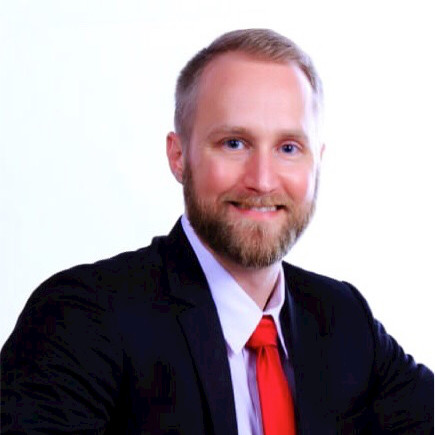
Trey Griffiths, Salesforce Architect

Trey GriffithsSalesforce Architect, MBA candidate

Architecture that actually moves the needle.

I'm Trey, a Salesforce Architect with deep experience turning complex org challenges into clean, scalable systems. I've worked with enterprise companies, growing businesses, and mission-driven organizations, building everything from Data Cloud pipelines to full CI/CD automation frameworks.

I don't just identify problems and hand you a report. I stay in it with you: designing solutions, implementing them, and making sure your team can own them long after our engagement ends.

Whether you're optimizing a commercial operation or running a nonprofit, I bring the same commitment to clean architecture and real results. If you're in the nonprofit sector specifically, I also bring hands-on NPSP and Nonprofit Cloud experience and already speak your language.

Certifications and training

  • Salesforce Systems Architect
  • Salesforce Application Architect
  • Identity and Access Management Architect
  • Development Lifecycle and Deployment Architect
  • Platform Integration Architect
  • Data 360 Consultant
  • Agentforce Specialist
  • Platform Developer
  • Project Management Professional (PMP)
  • Lean Six Sigma Black Belt
  • Certified Scrum Master
  • MBA candidate

Your Salesforce org, working the way it should.

  • Architectural Health Review

    A professional diagnostic of your Salesforce org, surfacing technical debt, security gaps, and missed license value. The starting point for any strategic engagement.

    Start here, it's free
  • Enterprise Architecture

    End-to-end design of your data model, security model, and automation infrastructure. Built to scale with your business, not against it.

  • Data 360 and AI Automation

    Unify your customer data and activate it with Agentforce and Einstein. I help you move from scattered records to a single, actionable source of truth.

  • Integrations and CI/CD

    Clean integrations with external systems and automated deployment pipelines using GitHub Actions and JWT-based auth, built to actually hold up in production.

  • Nonprofit CRM

    NPSP and Nonprofit Cloud implementations tailored for donor management, grant reporting, and stewardship automation. Built by someone who understands the mission.

  • Technical Debt Remediation

    I scope, prioritize, and execute the cleanup work that's been on your backlog. Less clutter, faster performance, fewer fires.

Recent work.

These come from my work as the in-house architect for a national nonprofit running six Salesforce clouds. The organization stays unnamed. The work is mine.

Data Cloud

Duplicate donor profiles cut from 20% to 5%

Supporter data came from the core Salesforce org and several outside platforms, and about one in five profiles was a duplicate of someone already on file. I implemented Data Cloud, brought each source in as a data stream mapped to the standard data model, and designed the identity resolution match and reconciliation rules that decide when two records are the same person. Duplicate profiles fell from 20% to 5%, so fundraising and marketing now work from one view of each supporter.

Integration

A siloed donation platform, brought into Salesforce

Online gifts were processed in a separate donation platform, so Salesforce never had the full picture of who gave and when. I built a webhook integration that sends each gift to Salesforce as it happens, where Apex matches the donor to an existing record or creates one and records the gift in Nonprofit Cloud. Gifts now land in Salesforce linked to the right donor, and fundraising reports include online giving without manual imports.

Integration

Slack alerts from Salesforce, two ways

Staff needed to hear about important moments in Salesforce as they happened, without watching dashboards. I built two patterns. Platform Events, published from Apex and Flow, carry alerts that more than one system cares about: the transaction never waits on Slack, and a Slack outage can't roll back Salesforce work. For simple one-to-one alerts, an Apex HTTP callout posts straight to a Slack webhook through a Named Credential, keeping the URL out of code.

Data quality

Donor addresses fixed in the backlog and at the source

Addresses arrived from the online giving platform exactly as donors typed them, and the donor base was due for a change-of-address pass. I processed an NCOA/PCOA file into about 18,900 address updates, 3,300 do-not-mail suppressions, and 1,400 deceased flags, then added validation to the gift pipeline with an Apex Queueable and the Google Address Validation API. Existing records were corrected in bulk, and new addresses are standardized as they arrive.

Nonprofit Cloud

A household model that covers every donor

The org runs Nonprofit Cloud on Person Accounts, and households existed only where two people shared a last name and address, leaving about 168,000 household accounts with no Party Relationship Group behind them. I helped the team decide to give every person a household, corrected about 2,900 existing group records, loaded the missing 168,000, and designed an Apex matching service so accounts created by integrations join the right household automatically.

DevOps

Releases and sign-in that don't depend on one laptop

Six clouds, several inbound integrations, and three Salesforce releases a year, with deployments tied to stored credentials. I moved the CI/CD pipeline from stored sfdx auth URLs to JWT-based authentication in GitHub Actions, rolled out Okta single sign-on, and run a release impact review across every cloud ahead of each seasonal release. Deployments now run from source control with no long-lived credentials, and every release is reviewed before it lands.
How an engagement works.

Every engagement starts the same way, and you decide after each step whether to take the next one.

  1. Health Review call

    We dig into your current setup together: data model, automation, security, and licenses.

    Free, 30 minutes, on Google Meet
  2. Findings report

    You get a written summary of what I found and high-level recommendations.

    Delivered after the call
  3. Roadmap or ongoing support

    We talk through whether a strategic roadmap or ongoing support is the right fit for the findings. If it is, I design it, build it, and hand it over to your team.

    Scoped to what the review finds

Book your Architectural Health Review.

A free 30-minute session to surface what's holding your Salesforce org back. No commitment required.

  • All times are Eastern.
  • Sessions are held over Google Meet. You'll get a link in your confirmation email.
  • Need to reschedule? Use the link in your confirmation email at least 24 hours before.
  • Questions before booking? treygriffiths@trey60architecture.com
Free30 minutes

Architectural Health Review

Not sure where to start? You'll walk away with a clear picture of what's holding your org back, led by a senior Salesforce architect.

  • Data model and automation review
  • Security and license analysis
  • Summary findings and high-level recommendations report
Book your review

Best for growing organizations looking to scale their Salesforce instance and optimize ROI.